5 STRATEGIES FOR COMMUNICATION
1. Apply framing theory strategically
How you frame mental health matters. Present conditions like depression or bipolar disorder within a public health framework (prevalence, treatment, recovery rates) rather than a moral or individual-failure lens. Research shows that structural framing reduces blame and increases support for treatment and policy solutions.
2. Use narrative persuasion (contact-based communication)
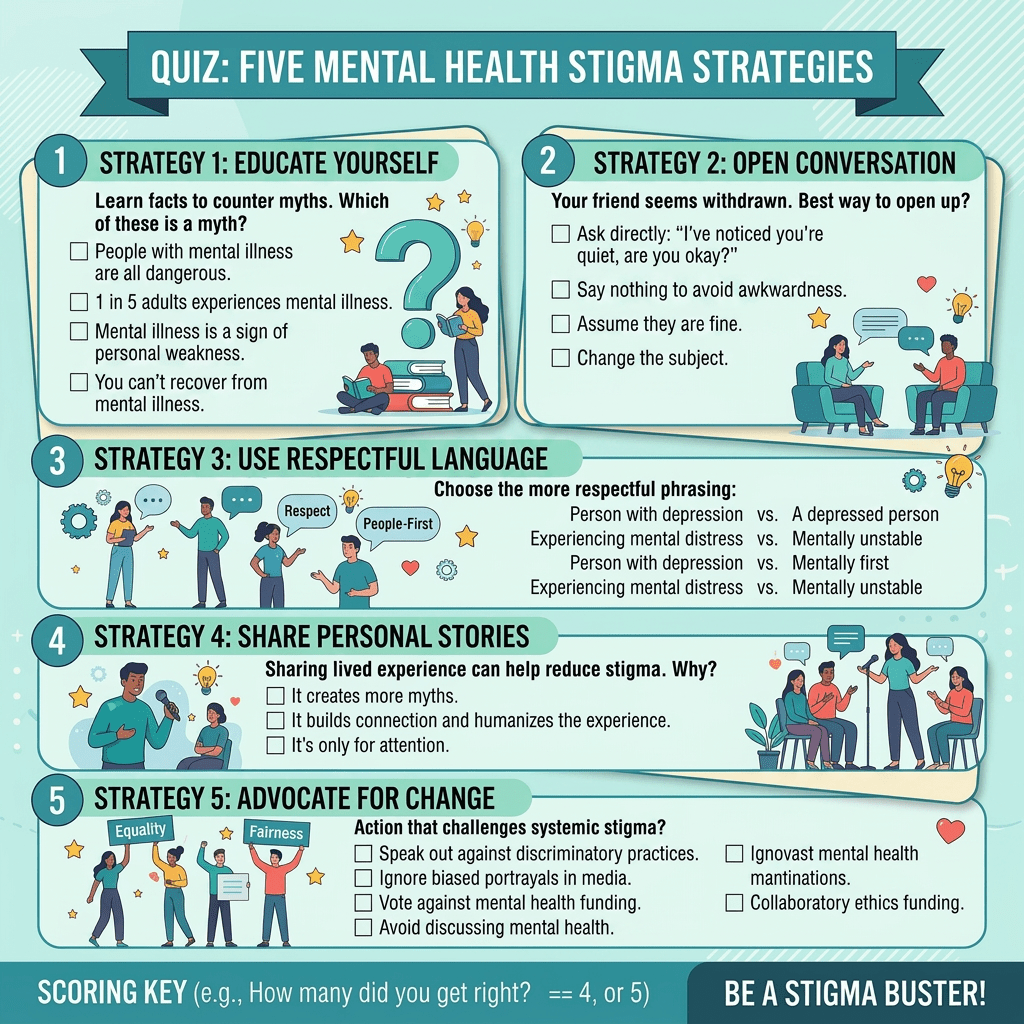
Sharing lived experiences—either your own or through credible stories—can reduce stigma more effectively than statistics alone. This is rooted in parasocial contact theory, where exposure to personal narratives humanizes conditions like post-traumatic stress disorder and reduces implicit bias.
3. Incorporate cultural competence
Mental health stigma varies across cultures. Tailor communication to align with cultural values, beliefs, and language norms. For instance, some communities may somaticize conditions like anxiety (expressing it as physical symptoms), so adapting your language improves understanding and reduces resistance.
4. Emphasize recovery-oriented messaging
Avoid deterministic or overly clinical language. Highlight that individuals can and do recover or manage conditions effectively with support and treatment. This counters fatalistic beliefs about disorders such as schizophrenia and promotes hope, which is a key factor in stigma reduction.
5. Challenge stigma through dialogic communication
Instead of one-way correction (“That’s wrong”), engage in two-way dialogue. Ask questions, invite reflection, and create space for discussion. This aligns with motivational interviewing principles, which are more effective at changing attitudes than confrontation.
- Centers for Disease Control and Prevention. (2025, June 9). Mental health stigma. https://www.cdc.gov/mental-health/stigma/index.html
- By: Shawn Carone
 Free your mind. Say no to stigma!